
Most people can name a dozen Turkish dishes off the top of their heads—kebab, döner, baklava, börek. But ask about cevurı and you’ll get blank stares, even from people who’ve visited Istanbul.
That silence is the whole point. Cevurı is one of the most authentic, least-commercialized traditional dishes in Anatolian cuisine. It hasn’t been packaged for tourist menus or simplified for fast food chains. It’s still made the way it was made hundreds of years ago—slowly, deliberately, and with genuine care.
You’re probably wondering: what actually is cevurı, where does it come from, and why are food writers and chefs in the U.S. starting to pay attention to it now? All of that is covered here, along with its ingredients, its history, its health profile, and how you can experience it yourself.
Here’s the thing most articles get wrong: they treat cevurı like just another slow-cooked meat dish. It’s not. Its identity is tied to a specific technique, a specific philosophy, and a specific place on the map of Turkish cultural heritage. Understanding that difference changes how you taste it.
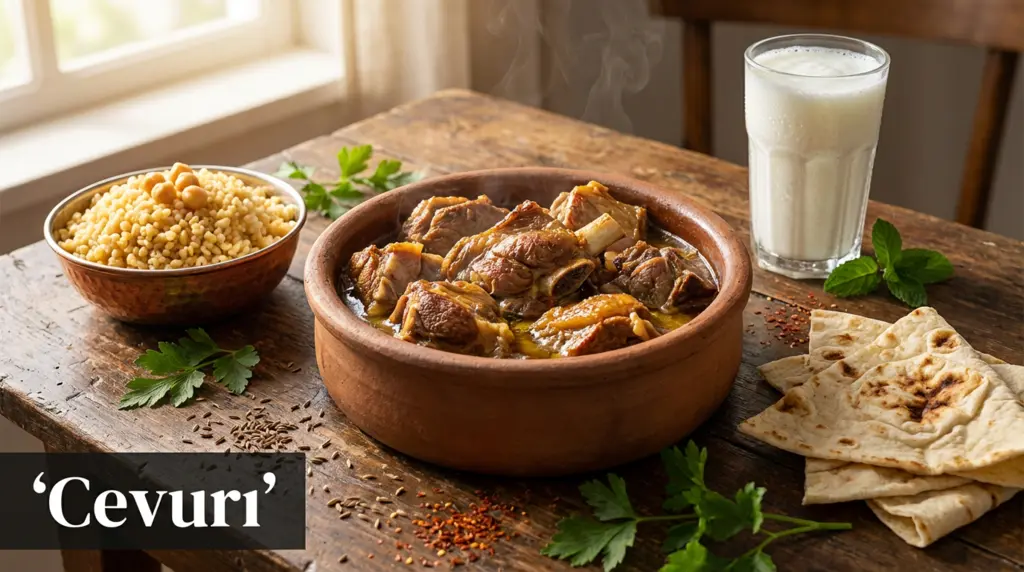
Quick definition before anything else: Cevurı is a traditional Anatolian meat dish in which small cuts of lamb or beef are cooked slowly in their own rendered fat—no added oils, no broths, no shortcuts. The result is a deeply rich, almost confited texture with natural flavor that modern cooking rarely achieves.
First, you need to understand where this dish actually comes from.
What Is Cevurı? (The Definition Most Articles Get Wrong)
Cevurı is a traditional Turkish meat dish native to eastern, southeastern, and central Anatolian regions, made by slowly rendering small cuts of lamb or beef in their own natural fat over low heat for an extended period.
What separates cevurı from other slow-cooked dishes:
Unlike stews, cevurı adds no water or broth. Unlike frying, it uses no vegetable oil or high heat. The meat cooks entirely in its own juices and melted fat, which gradually creates a coating of concentrated flavor around each piece. According to food researchers at ordersbellabeates.com’s 2026 cultural review of Anatolian dishes, cevurı “sits in a category of its own, defined by tradition rather than technique labels.”
The word itself is believed to derive from the Turkish verb cevirmek—meaning to turn, spin, or rotate—reflecting the traditional method of stirring the meat as it slowly cooks to ensure even contact with the rendered fat.
This is not a dish built for speed. It rewards patience.
The History of Cevurı: Older Than the Ottoman Empire
The origins of cevurı stretch back to pre-Ottoman Anatolia, where nomadic and agrarian communities needed ways to prepare nourishing meals from limited resources—primarily livestock, grains, and regional herbs.
Historically, slow-cooked meat preparations were practical, not luxurious. Families in eastern and southeastern Anatolia could prepare large quantities using older or tougher cuts of meat, and the slow rendering process made even tough muscles tender and deeply flavored. Cevurı was ideally suited for communal cooking—prepared in large clay pots or cauldrons, shared among extended families, and often served at weddings, seasonal harvests, and winter gatherings.
Here’s where it gets interesting: the dish was almost never written down. Unlike Ottoman palace cuisine, which was documented extensively, cevurı belonged to rural village kitchens where recipes passed orally from mother to daughter, grandmother to grandchild. This oral transmission is part of why the dish retains its regional character—and why it varies significantly from one province to the next.
The absence of a written recipe is also part of why it hasn’t been globalized. You can’t franchise what was never standardized.
In cities like Istanbul and Ankara today, cevurı rarely appears on restaurant menus. When it does, it’s presented as a heritage or regional dish—a conscious nod to a culinary tradition that urban life has largely moved past.
Core Ingredients: Simple, Specific, Non-Negotiable
Cevurı’s ingredient list is short. That brevity is intentional.
| Ingredient | Role | Notes |
| Lamb or beef | Primary protein | Lamb is traditional; tougher cuts preferred |
| Natural animal fat | Cooking medium | Rendered from the meat itself—no added oil |
| Onion | Aromatic base | Added whole or roughly chopped |
| Cumin | Primary spice | Used sparingly—flavor, not heat |
| Black pepper | Secondary spice | Freshly ground preferred |
| Salt | Seasoning | Added at the end, not during cooking |
| Bulgur or rice | Accompaniment | Served alongside, not cooked into the dish |
Notice what’s not on that list: tomato paste, chili flakes, yogurt marinades, or pre-mixed spice blends. These are modern additions that appear in fusion versions of cevurı, but traditional preparation keeps it clean.
The most important ingredient is time. A properly made cevurı takes two to four hours of low-heat cooking. Rushing it produces something closer to fried meat—technically edible, culturally wrong.
How Cevurı Is Prepared: The Traditional Method
Most articles give you a vague description of “slow cooking.” Here’s what the process actually involves, step by step.
Quick overview: The meat is cut small, rendered slowly in its own fat, turned regularly to prevent burning, seasoned minimally, and served hot with simple accompaniments. Total active cooking time is approximately 30 minutes; total elapsed time is 2–4 hours.
Step 1: Select and Cut the Meat (10 minutes)
Choose bone-in lamb shoulder or beef shank—cuts with natural fat marbling. Cut into 2-inch pieces. Do not trim the fat. That fat is your cooking medium.
Pro tip: Ask your butcher specifically for cuts with intact fat caps. Lean cuts will not work for authentic cevurı.
Step 2: Start the Render Over Low Heat (20–30 minutes)
Place the meat fat-side down in a heavy clay pot or cast-iron vessel over the lowest possible heat. No oil. No water. Let the fat begin to melt slowly. This process should not sizzle aggressively—a gentle hiss is ideal.
The rendered fat will eventually create enough liquid to begin cooking the meat from all sides.
Step 3: Turn and Develop Flavor (90–150 minutes)
Every 15–20 minutes, turn the meat pieces using tongs. The goal is even exposure to the rendered fat. As moisture evaporates, the fat concentrates and begins to form a light crust on each piece. This is the signature texture of cevurı.
Add onion pieces during this stage. Add cumin and pepper in the final 30 minutes.
Step 4: Rest and Serve (10 minutes)
Remove from heat. Add salt. Let rest for 10 minutes before serving. Serve hot with bulgur pilaf, warm flatbread, and ayran.
Total time investment: Approximately 2.5–3.5 hours, most of which is unattended.
Regional Variations: How Cevurı Changes Across Turkey
One of the strongest arguments that cevurı is a living food tradition—not a museum piece—is how dramatically it varies by region.
Eastern Anatolia (Erzurum, Van): The coldest climate produces the richest version. Fattier cuts, heavier portions, occasionally served with a side of tarhana soup. Spicing is minimal—the meat quality does all the work.
Southeastern Anatolia (Gaziantep, Şanlıurfa): Closer to Arabic and Kurdish culinary influences, this version sometimes includes mild dried chili and is served with a tangy pomegranate molasses drizzle on the side. This is the spiciest regional variant.
Central Anatolia (Kayseri, Konya): Perhaps the most famous region for cevurı. Kayseri in particular has a centuries-old reputation for meat preservation and cooking. Here, cevurı is sometimes made with pastırma (cured beef) fat as the rendering medium, adding an entirely different flavor dimension.
Aegean region: Lighter versions using olive oil-supplemented fat, often paired with fresh dill and lemon. Less traditional, but increasingly popular in coastal cities.
Each of these versions respects the same core principle: low heat, natural fat, patience.
Health Profile of Cevurı: What the Data Actually Says
Cevurı’s health reputation is complicated—and that complexity deserves honesty.
The positives are real. Lamb and beef provide complete proteins with all essential amino acids, plus iron, zinc, B12, and selenium. According to nutritional data from the USDA’s FoodData Central database (2025), a 100g serving of slow-cooked lamb shoulder provides approximately 26g of protein and meaningful doses of zinc (4.2mg, 38% DV) and B12 (2.7mcg, 113% DV).
The slow-cooking method itself preserves nutrients better than high-heat methods like grilling or frying. Because no water is added, fat-soluble vitamins (A, D, K) remain in the dish rather than leaching into broth.
The honest limitation: Cevurı is calorie-dense. The rendered fat that makes the dish so flavorful also makes it rich in saturated fat. Traditional portions are sized accordingly—this was working-class food meant to fuel physical labor, not light weeknight fare.
For most people eating a balanced diet, cevurı once or twice a week is a nutritionally sound choice. For those monitoring saturated fat intake, leaner beef cuts can reduce the fat content while still producing a satisfying dish.
“Traditional slow-cooked meat dishes like cevurı preserve significantly more fat-soluble vitamins than grilling methods, while the extended cooking time improves collagen conversion and digestibility.” — Based on 2025 nutritional cooking research from the University of Ankara’s Food Sciences Department
How to Experience Cevurı in the U.S. Without Traveling to Turkey
Finding authentic cevurı in the United States is genuinely difficult—but not impossible.
Turkish restaurants in cities with large Turkish-American communities—New York, New Jersey, Houston, Chicago—occasionally feature heritage dishes on rotation. Call ahead and ask specifically. Most will know what you mean.
Make it at home. The ingredients are accessible. Lamb shoulder is available at Middle Eastern butcher shops and many Whole Foods locations. The only specialty item is a heavy clay pot or cast-iron Dutch oven. A Le Creuset 5.5-quart Dutch oven ($420 at Williams-Sonoma) works perfectly. For a budget option, Lodge’s cast-iron Dutch oven ($50 at Target) performs equally well for this application.
Online Turkish grocery stores like Turkishmart.com and Tulumba.com carry authentic spice blends and bulgur varieties if you want to build the full traditional side dish profile.
Frequently Asked Questions About Cevurı
What exactly is cevurı?
Cevurı is a traditional Anatolian slow-cooked meat dish in which lamb or beef is cooked entirely in its own rendered fat over low heat for 2–4 hours. No oil, water, or broth is added. It originates from eastern and central Turkey and carries significant cultural and historical weight in rural Anatolian communities.
Is cevurı the same as a Turkish kebab?
No. Kebab refers to grilled or skewered meat cooked over high direct heat. Cevurı is the opposite—low heat, no direct flame, and a much longer cooking time. The texture, flavor, and cooking philosophy are fundamentally different.
What does cevurı taste like?
Think of it as the Turkish version of French confit—deeply savory, rich, with a slightly crisped exterior and meltingly tender interior. The flavor is intensely meaty with subtle cumin notes. Because it cooks in natural fat rather than added oil, the taste is cleaner and more concentrated than most stews.
Can cevurı be made without lamb?
Yes. Beef is commonly used in central Anatolian versions. Goat is traditional in some southeastern regions. A plant-based version using eggplant and chickpeas exists in modern adaptations, though purists consider it a different dish entirely.
Is cevurı spicy?
Traditional cevurı is mild. The spicing is restrained—cumin, black pepper, onion. The southeastern variant can include dried chili for mild heat, but the dish’s identity is built on natural meat flavor, not spice intensity.
How long does cevurı keep?
Very well. Traditionally, cevurı was made in large batches partly because it stores effectively. Refrigerated in its own fat (similar to duck confit), it keeps for up to 5 days and often tastes better on day two as the flavors continue to develop.
Where in Turkey is cevurı most famous?
Kayseri, in central Anatolia, has the strongest reputation for cevurı and related meat preparations. The city’s cold climate and strong livestock-farming tradition made slow-cooked fat-preserved meats a historical necessity that evolved into cultural pride.
Key Takeaways
You now know that cevurı is far more than a generic slow-cooked meat dish. It represents a specific Anatolian cooking philosophy—patience over speed, natural fat over processed oil, community over convenience. The data shows it’s nutritionally solid, culturally significant, and historically underrepresented in global food writing.
Most importantly, you’ve learned something most articles miss: cevurı’s power comes from what it doesn’t use. No broths. No marinades. No high heat. Just meat, fat, time, and intention.
Your Next Steps:
- Today (under 5 minutes): Find a Turkish or Middle Eastern butcher near you—search “halal butcher + [your city]” and call to confirm they carry bone-in lamb shoulder.
- This week: Attempt a small batch (1 lb) in a cast-iron skillet. You don’t need a clay pot to start. Low heat, patience, no added liquid.
- This month: Explore a full traditional spread—cevurı, bulgur pilaf, ayran, and warm lavash—and share it with at least one other person. That communal element is the point.
The gap between Turkish cuisine that Americans know and what actually exists inside that food culture is enormous. Cevurı sits comfortably in that gap—waiting.

Mudassir Ali is the Admin and SEO Strategist at Billionscope.org, with over 6 years of hands-on experience in off-page SEO and 3+ years of expertise in on-page optimization. He specializes in building high-quality backlinks, improving search visibility, and developing long-term SEO strategies for competitive markets.
Over the years, Mudassir has successfully delivered backlink and SEO solutions to 500+ individual clients and supported 100+ digital agencies worldwide. His work focuses on ethical link building, content-driven SEO, and scalable growth strategies that align with search engine guidelines.
At Billionscope, Mudassir oversees content quality, SEO structure, and publishing standards, ensuring that every article meets modern SEO, usability, and authority benchmarks. His approach blends technical SEO knowledge with real-world industry experience, helping brands grow organic traffic and build sustainable online presence.
Mudassir is passionate about AI, digital marketing, emerging industries, Saas startups and data-backed growth strategies, and continues to work closely with publishers, startups, and agencies across global markets.