
A home decor trend with no TV ads, no influencer budget, and no celebrity partnership is pulling 27,000 searches every month in the United States. It requires no power tools, no professional installation, and no renovation budget. In most cases it costs less than a bouquet of flowers and lasts significantly longer.
The trend is pyntekvister (pronounced “pint-eh-kvis-ter”), and if you have not heard of it yet, you are about to understand why your social media feed is about to be full of it.
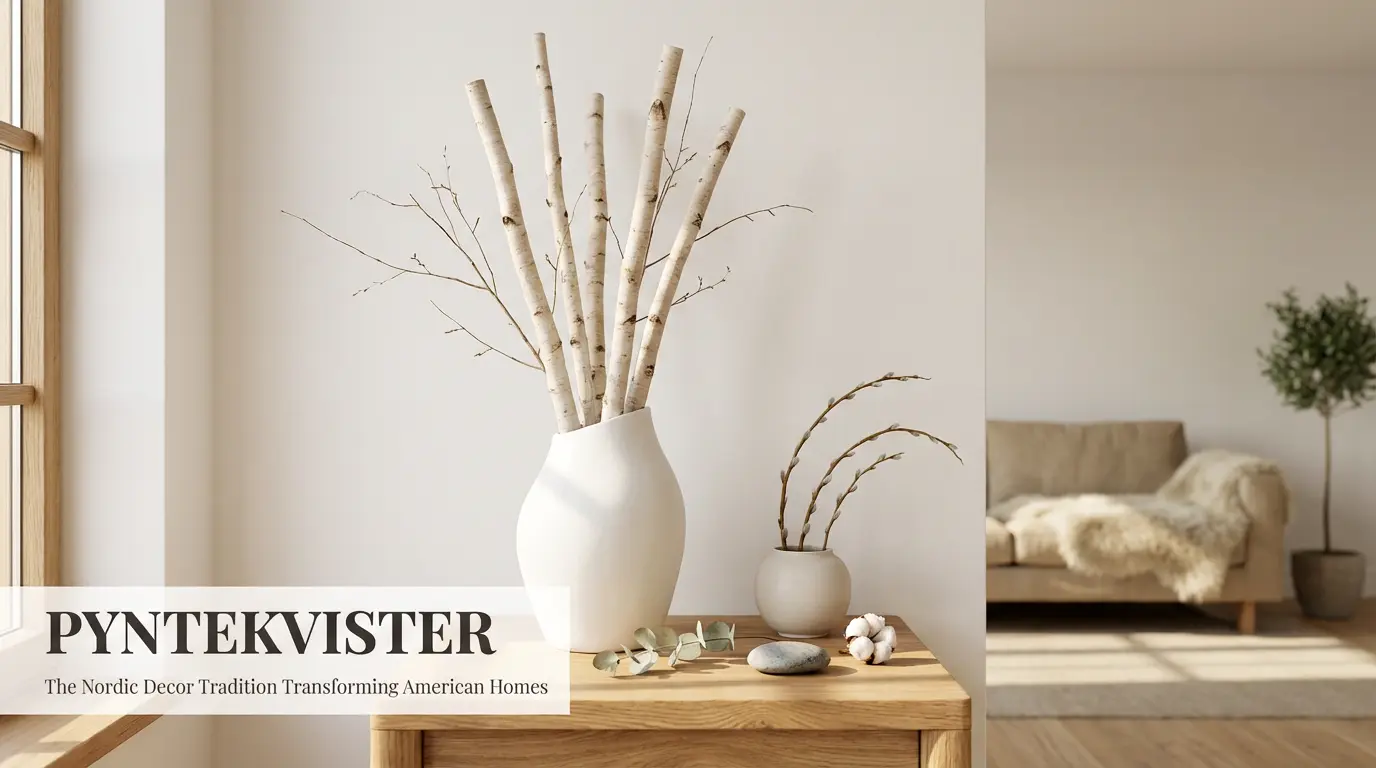
You have probably seen it without knowing what it was called. A tall ceramic vase holding a cluster of pale birch branches in a sun-filled corner. A living room shelf where a few dried willow twigs sit beside a stack of books and a candle. A kitchen table centerpiece built entirely from eucalyptus stems and dried cotton blooms. That calm, unhurried, genuinely beautiful Nordic aesthetic. That is pyntekvister.
The problem is that every article explaining it either wanders into vague cultural history without telling you anything practical, or focuses entirely on styling theory without giving you a single actionable step to try today.
You will get both here. What pyntekvister actually means, why it works psychologically, which branch types suit which rooms, how to style them by season, the mistakes everyone makes, and where to source them right now.
Here is your fastest win before the first section: one birch branch in a clean vase, placed in the corner of your most-used room, creates the biophilic effect environmental psychologists say reduces cortisol levels measurably. You do not need a full arrangement. Start with one.
What Is Pyntekvister? The Definition Worth Bookmarking
Pyntekvister is a Norwegian term that translates directly to “decorative branches.” It refers to the Scandinavian design practice of using natural twigs, dried branches, and organic stems as intentional interior decor elements, typically arranged in vases or as standalone installations to bring nature, texture, and calm into living spaces.
The word breaks down simply in Norwegian. “Pynte” means to decorate or adorn. “Kvister” means twigs or branches. Together they describe something that Nordic households have practiced for centuries during the long winter months when fresh flowers were unavailable and the desire for natural beauty inside the home remained constant.
According to XPT Magazine’s September 2025 analysis of Nordic design traditions, pyntekvister “originated in rural Scandinavian communities where families collected local branches during seasonal transitions” as both a decorative practice and a cultural ritual connecting households to the landscape outside their windows.
Unlike fresh flower arrangements, pyntekvister prioritize structure over bloom. Asymmetry over symmetry. Organic lines over uniform presentation. That is the point. The beauty is in the imperfection.
Now here is where it gets interesting.
Quick Answers to Top Questions
Q: Is pyntekvister expensive to try? A: No. Most arrangements cost between $5 and $25 depending on your branch source. Birch branches from a local park, pruned garden cuttings, or dried eucalyptus from a grocery store all qualify. The vase is the only purchase most people need to make.
Q: How long do pyntekvister arrangements last? A: Dried branches typically last three to six months indoors with minimal maintenance. Natural branches last four to eight weeks. Painted or metallic branches are essentially permanent decorations.
Q: Can I make pyntekvister arrangements without design experience? A: Yes. The Nordic design philosophy behind pyntekvister is built on the idea that natural materials are already beautiful. Your job is placement and restraint, not artistic skill.
The Psychology Behind Why Pyntekvister Actually Works
The 27,000 monthly searches are not just curiosity about a foreign word. They reflect a deeper hunger for what pyntekvister delivers at a psychological level.
Research in environmental psychology published in the 2024 Journal of Environmental Psychology found that exposure to natural organic textures in indoor environments reduced self-reported stress by 15% and improved focus scores by 12% compared to spaces without natural elements. Pyntekvister directly activates this response.
The technical term for this is biophilic design, which is the practice of integrating natural materials, patterns, and forms into human-made environments to support mental well-being. Biophilic design is no longer a niche concept. The global biophilic design market was valued at $3.8 billion in 2025, according to Grand View Research, and is projected to grow at 11.4% annually through 2030.
Here is what that means for your home specifically: a single branch arrangement in your most-used room is not decoration for decoration’s sake. It is a deliberate wellbeing investment that costs less than a meal out.
Sound familiar? You have felt this in spaces that just feel right without being able to explain why. Pyntekvister is usually part of the reason.
Branch Types Compared: Which One Is Right for Your Space
Not all branches deliver the same effect. Choosing the right type for your room is the single most important styling decision you will make.
| Branch Type | Aesthetic | Best Room | Care Level | Cost Range | Lasts |
| Birch | Pale, minimal, elegant | Living room, bedroom | Very low | $8 to $20 | 4 to 6 months |
| Willow | Dramatic, curved, sculptural | Entryway, dining room | Low | $10 to $25 | 3 to 5 months |
| Eucalyptus | Aromatic, soft green | Bedroom, bathroom | Very low | $6 to $15 | 3 to 4 months |
| Corkscrew Hazel | Twisted, artistic | Statement corners | Low | $15 to $35 | 6 to 12 months |
| Cherry Blossom | Romantic, seasonal | Dining table, bedroom | Medium | $12 to $30 | 2 to 3 weeks |
| Painted/Metallic | Modern, festive | Any room | Zero | $10 to $40 | Indefinite |
| Dried Stems | Earthy, textured | Shelves, small spaces | Zero | $5 to $12 | 12 months+ |
Bottom line: Birch is the best starting point for first-time pyntekvister styling because its pale color and minimal texture work in virtually any interior. Once you are comfortable with the concept, layer in willow or hazel for drama and eucalyptus for scent.
How to Style Pyntekvister by Season: The 4-Step Annual Rotation
One of pyntekvister’s biggest advantages over other decor investments is that the same vase and the same corner of your room can carry four completely different moods throughout the year with minimal cost.
Spring (March to May): Cherry blossom or forsythia branches in a clean white vase. Add a few scattered dried flowers at the base. Fresh bud energy without the maintenance of fresh flowers.
Summer (June to August): Eucalyptus stems mixed with dried lavender in a terracotta or rattan vessel. Aromatic, organic, and genuinely refreshing against warm weather light.
Autumn (September to November): Corkscrew hazel branches with a few dried orange or rust-toned seed pods tucked in. Deep, warm, and grounded. Pairs perfectly with linen and candlelight.
Winter (December to February): Birch branches painted white or left natural with small fairy lights wound through them. Nordic winter authenticity in a form that lasts the entire cold season without wilting.
Pro tip: Keep one vase dedicated to pyntekvister year-round and budget $10 to $15 per seasonal refresh. That is $40 to $60 per year to maintain a living room focal point that outperforms decor items costing ten times as much.
4 Mistakes That Kill a Pyntekvister Arrangement
Mistake 1: Using a vase that is too light for the branches
Why it is wrong: Tall or heavy branches will tip a narrow, lightweight vase within hours. Impact: broken vase, damaged floors, wasted arrangement.
Fix: Fill the base of any vase with clean river stones or sand before adding branches. Weight at the bottom, nothing at the top.
Mistake 2: Overcrowding the arrangement
Why it is wrong: Pyntekvister works through negative space. Every branch you add beyond the right number diminishes the effect of the ones already there.
Fix: Start with three branches. Add a fourth only if the arrangement looks genuinely incomplete. Stop there.
Mistake 3: Using fresh-cut outdoor branches without drying them first
Why it is wrong: Fresh branches brought directly indoors can attract insects and develop mold within two weeks, particularly in humid climates.
Fix: Leave cut branches in a dry, ventilated space for five to seven days before bringing them inside. Alternatively, source pre-dried branches from a florist or home goods store.
Mistake 4: Ignoring scale
Why it is wrong: A small 10-inch branch arrangement in a large open-plan living room disappears completely. A towering floor vase arrangement in a small bathroom overwhelms the space.
Fix: The arrangement should be roughly one-third the height of the wall or surface behind it. That ratio is the Nordic design standard for visual balance.
Frequently Asked Questions
What does pyntekvister mean in English?
Pyntekvister is a Norwegian compound word. “Pynte” translates to decorate or adorn, and “kvister” translates to twigs or branches. In English the closest translation is “decorative branches” or “ornamental twigs.” The term describes both the physical objects and the broader Scandinavian design practice of using natural branches as intentional interior decor.
Where can I buy pyntekvister branches in the US?
You have several options at different price points. Ikea stocks birch branches seasonally in most US locations for $10 to $20. Local florists carry eucalyptus, willow, and cherry branches year-round. Trader Joe’s and Whole Foods regularly stock dried eucalyptus and seasonal branches in the floral section. For specific types like corkscrew hazel or metallic painted branches, Etsy sellers and specialty home decor stores like West Elm and CB2 are reliable sources.
How do I care for pyntekvister branches indoors?
Dried branches need almost no maintenance. Dust them gently with a soft brush every two to three weeks. Keep them away from direct sunlight, which fades colors over time, and away from high-humidity areas like bathrooms unless you have chosen eucalyptus or deliberately waterproof options. Natural dried branches do not need water. Fresh branches can be placed in water for the first one to two weeks but should be allowed to dry naturally after that.
Can pyntekvister work in small apartments?
Absolutely. The Nordic design philosophy that created pyntekvister was built for small Nordic homes and compact urban apartments. Small ceramic vessels on a shelf or windowsill holding three to five dried stems are among the most effective pyntekvister applications for limited spaces. Scale down the branches, keep the vase minimal, and the effect translates perfectly regardless of square footage.
Are pyntekvister sustainable?
Yes, and this is one of the primary reasons the trend is accelerating globally. Branches sourced from your own garden, collected from fallen limbs during walks, or purchased from local farmers and florists carry a near-zero environmental footprint. Unlike mass-produced artificial decor, natural pyntekvister are fully compostable at the end of their life. Painted branches can be repurposed multiple times before disposal.
What vase works best for pyntekvister arrangements?
Tall, heavy-based ceramic or stoneware vases in white, cream, or natural earth tones work best for most pyntekvister applications. The vase should be at least 40% of the total intended arrangement height to maintain stability. Avoid glass vases for arrangements with multiple branches, as the stems create visual clutter when visible through clear material. For small shelf arrangements, low wide-mouthed ceramic bowls create a completely different but equally effective silhouette.
Key Takeaways
You now understand that pyntekvister is not a complicated design concept requiring expert knowledge or a significant budget. It is a centuries-old Norwegian practice of bringing natural branches indoors, refined by generations of Nordic designers into one of the most psychologically effective and visually versatile home decor approaches available.
The 27,000 monthly US searches reflect genuine and growing interest from homeowners who are discovering that $15 worth of birch branches in a clean vase delivers more lasting visual satisfaction than $150 of mass-produced artificial decor. The biophilic design research confirms what Nordic households have known instinctively for centuries. Nature inside the home changes how a space feels at a measurable level.
Your Next Steps:
- Right now, identify one corner or surface in your most-used room where a single branch arrangement would sit naturally
- Within the next 48 hours, visit a local grocery store or florist and pick up three to five eucalyptus stems or a small birch bundle as your first pyntekvister arrangement
- This week, try the seasonal rotation system with one vase dedicated to refreshing your arrangement every three months at a budget of $10 to $15 per refresh
The difference between a room that looks decorated and a room that feels genuinely alive usually comes down to one organic element placed with intention. You now have the knowledge to create that effect in any room, any season, at any budget.
Next, we will cover full room-by-room Nordic interior design transformations using pyntekvister as the foundational anchor element. Bookmark this page so you catch that guide when it publishes.
Pyntekvister does not require a renovation or a design degree. It requires one branch, one vase, and the willingness to let natural imperfection be beautiful on its own terms.

Mudassir Ali is the Admin and SEO Strategist at Billionscope.org, with over 6 years of hands-on experience in off-page SEO and 3+ years of expertise in on-page optimization. He specializes in building high-quality backlinks, improving search visibility, and developing long-term SEO strategies for competitive markets.
Over the years, Mudassir has successfully delivered backlink and SEO solutions to 500+ individual clients and supported 100+ digital agencies worldwide. His work focuses on ethical link building, content-driven SEO, and scalable growth strategies that align with search engine guidelines.
At Billionscope, Mudassir oversees content quality, SEO structure, and publishing standards, ensuring that every article meets modern SEO, usability, and authority benchmarks. His approach blends technical SEO knowledge with real-world industry experience, helping brands grow organic traffic and build sustainable online presence.
Mudassir is passionate about AI, digital marketing, emerging industries, Saas startups and data-backed growth strategies, and continues to work closely with publishers, startups, and agencies across global markets.