
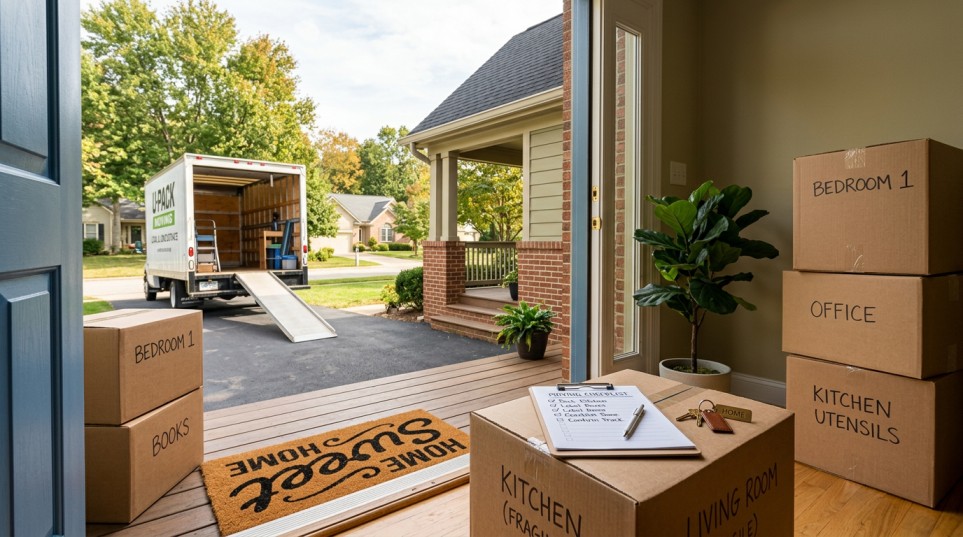
Moving house sits comfortably among life’s most stressful events — right up there with changing jobs and major health scares. It’s not just the physical labour of shifting boxes. It’s the mental load of coordinating a hundred moving parts simultaneously: finding movers, packing years’ worth of belongings, managing utilities at two addresses, notifying what feels like every institution you’ve ever interacted with, and somehow doing all of this while still showing up to daily life.
The difference between a move that leaves you exhausted but functional and one that leaves you genuinely broken comes down to one thing: preparation. Not the vague, “I should probably start packing soon” kind of preparation, but a structured, week-by-week plan that distributes the workload evenly and eliminates last-minute panic.
This guide covers the full picture — from the moment you decide to move all the way through your first weeks in the new place.
8 Weeks Before Moving Day: Lay the Foundation
Eight weeks sounds like a lot of time. It isn’t, once you factor in that you still have a normal life running in parallel. Starting early isn’t about being overly cautious — it’s about giving yourself genuine breathing room when something unexpected happens, which it will.
Start with a full declutter. Go room by room and make honest decisions about what is actually worth moving. Moving costs — whether you’re hiring professionals or renting a truck — are directly tied to volume and weight. Every item you donate, sell, or discard now is money saved and time saved on packing and unpacking at the other end. List furniture and larger items on marketplace apps early; these take time to sell.
Get your moving quotes sorted. If you’re using a professional removal company, request at least three quotes. Binding estimates are worth asking for — they lock in your price regardless of what the final load weighs, whereas non-binding estimates can creep up. Ask specifically about what the quote covers: does it include packing materials, furniture disassembly, and insurance for damaged items? The cheapest quote rarely tells the full story.
Create a dedicated moving folder. Whether it’s a physical binder or a digital folder, put every moving-related document in one place: quotes, confirmation emails, lease or settlement paperwork, utility account numbers, insurance documents, and a running to-do list. This folder will save you significant time and stress throughout the process.
4 to 6 Weeks Out: Administration and Packing Begins
This phase is where the administrative work stacks up. It is also the phase most people defer too long, which is why change-of-address notifications and utility transfers are so often incomplete on moving day.
Sort your utilities and services. Contact your current providers — electricity, gas, internet, water — and set a disconnection date. At the same time, set up new services at the destination property. Electricity and gas can often be transferred if you’re staying with the same provider; internet is more likely to require a fresh installation, which can take several weeks to schedule. Book your internet installation early or you will be living off mobile data for the first fortnight.
Start packing non-essential rooms. Guest rooms, storage areas, garage shelving, seasonal clothing, books, and decorative items can all be packed well in advance without disrupting daily life. Use this time to develop your labelling system — every box should have its contents listed and its destination room marked clearly on at least two sides. This is not optional. Unlabelled boxes become everyone’s problem during unloading.
Notify the institutions that matter most. Banks, insurance providers, your employer’s payroll team, the electoral roll, subscriptions, and any medical providers should receive your change of address before the move, not after. The post office change-of-address service is a useful safety net but is not a replacement for updating individual accounts — it doesn’t capture everything.
Handle school enrolments if you have children. Popular schools and daycares often have waiting lists. The earlier you make contact, the better positioned you are to start on time.
1 to 2 Weeks Out: The Final Push
With moving day approaching, the pace picks up considerably. This is when the preparatory work you’ve done pays off — or when the consequences of not doing it become apparent.
Pack the remainder of your home. Leave out only what you genuinely need for daily life in the final days: a few sets of clothes, toiletries, basic kitchen items, chargers, and medications. Everything else should be boxed, labelled, and stacked by room.
Prepare your essentials box. This single box travels with you — not on the truck — and contains everything you’ll need in the first 24 hours at the new property: phone chargers, toiletries, a change of clothes, medications, important documents, snacks, coffee supplies, bedding for the first night, and a basic toolkit. The difference between having this box and not having it is the difference between a stressful first evening and a manageable one.
Confirm your moving logistics. Reconfirm times with your removal company. Check whether you need parking permits for the moving truck at either address — many urban councils require these and they take a few days to arrange. If you’re in an apartment building, reserve the service lift at both ends. Failing to do this is one of the most common causes of delays that nobody anticipates.
Clean your fridge. Empty and defrost it at least 24 hours before the move. Movers will not transport a refrigerator with food in it.
Moving Day: Keep Things Moving
Moving day itself is not the time for decisions — those should already be made. Your job on the day is to execute the plan, monitor progress, and stay calm when small things go sideways, because something always does.
Coordinate parking access, supervise loading to ensure fragile items are handled correctly, and do a final walkthrough of every room, cupboard, and outdoor space before the truck leaves. Check inside appliances that are staying — washing machines and ovens frequently end up with items left inside them.
The road portion of the day has its own dynamics. If it’s a long drive, you’ll encounter traffic, timing pressures, and fatigue. Good route planning and knowing how to adapt in real time matters more than people give it credit for — there’s a thorough breakdown of how to handle moving day logistics on the road that covers departure timing, route optimisation, and what to do when conditions change unexpectedly.
Once you arrive, direct the unloading by room. This is where clear box labelling pays back everything you invested in it — movers can place boxes directly in the correct room without stopping to ask, which speeds up the entire process significantly.
The First Two Weeks: Settling In
The move is technically over, but the settling-in period has its own demands that people consistently underestimate.
Unpack strategically, not randomly. The bedroom and bathroom should be functional on day one — prioritise these above everything else so that basic rest and hygiene aren’t compromised from the start. The kitchen comes next. Living areas and non-essential rooms can wait.
Do a security audit. Change the locks. You have no way of knowing how many copies of the previous keys exist. Test smoke detectors and carbon monoxide alarms; replace batteries if there’s any doubt. Locate the fuse box, the main water shut-off valve, and the gas meter before you need to find them in an emergency.
Introduce yourself to neighbours. This takes five minutes and pays dividends for years. People who know their neighbours receive help more readily, share local knowledge, and report concerns to each other. It is one of the simplest things you can do to improve your experience of a new area.
Set up home maintenance records. Create a basic log of the property — what you observed during the move-in inspection, any existing damage, warranty documents for appliances, and a calendar of routine maintenance tasks. This prevents disputes at the end of a lease and helps homeowners stay ahead of repairs.
Common Moving Mistakes That Cost Real Money
Even well-organised moves can be undermined by a handful of predictable errors. These are the ones worth specifically avoiding:
- Underestimating packing time. Most people pack at roughly one room per hour when working steadily. Plan accordingly and start earlier than you think necessary.
- Not photographing valuables before the move. If something is damaged in transit and you need to make an insurance claim, photographic evidence of its condition beforehand is essential.
- Skipping the binding estimate. Non-binding estimates can increase by 10–15% based on final load weight. Get the cost locked in.
- Leaving utility cancellations too late. You can end up paying for services at an address you no longer occupy for weeks if you miss the notice period.
- Packing prohibited items on the truck. Flammable liquids, aerosols, and certain chemicals cannot legally be transported by removal companies. These need to be disposed of, used up, or transported separately in your own vehicle.
- Not accounting for the unloading time. People focus on loading and driving time but forget that unloading a full truck takes just as long. Build this into your day’s schedule.
Conclusion
A well-managed move doesn’t happen by accident. It’s the result of starting early, distributing tasks across a realistic timeline, and treating the administrative side of the move with the same seriousness as the physical side. The households that arrive at their new home with energy still intact are the ones that spent the previous two months doing the work in manageable stages — not the ones who tried to pull it all together in the final week.
Every move has its chaotic moments. The goal isn’t to eliminate them — it’s to have enough preparation behind you that when they arrive, they’re inconveniences rather than emergencies. Start your checklist now, work through it steadily, and moving day becomes something you manage rather than something that happens to you.
