
Most people replace their rugs every couple of years without a second thought. Wool mat owners do something different. They invest once, choose carefully, and keep the same piece for decades.
That’s the quiet reality behind wollmatten.
You’ve probably seen this word while shopping for home textiles and wanted a straight answer: what are they, which type suits your space, and how do you actually choose the right one? Most guides throw a bullet list at you and call it a day. This one goes further.
By the time you finish reading, you’ll know exactly what separates a great wool mat from an average rug and how to make a decision that holds up for years.
What are wollmatten? Wollmatten are rugs and mats crafted from natural sheep’s wool fibers. Known globally for their durability, natural insulation, and hypoallergenic properties, they regulate indoor temperature, resist moisture, and trap airborne allergens at the fiber level. A quality wollmatte is widely considered one of the most sustainable and long-lasting flooring options available for modern homes.
Why Wollmatten Beat Synthetic Rugs
Here’s what most buyers don’t realize until after the purchase: synthetic rugs flatten within 12 to 18 months. Wool fibers spring back naturally after compression because of their unique crimped structure. That physical memory means your wool mat holds its shape under daily foot traffic far longer than any polyester alternative.
Wool is also naturally fire-resistant. It self-extinguishes rather than spreading flame. That’s a practical safety benefit rarely mentioned in standard buying guides, and it matters in a home with a fireplace or kitchen rugs.
Allergy sufferers gain real benefits too. Wool traps dust, pollen, and pet dander at the surface level and holds them there until you vacuum. That’s exactly why wollmatten are consistently recommended in homes with children, pets, and anyone sensitive to airborne particles.
Types of Wollmatten: Which One Fits Your Space?
Not all wollmatten are built the same. The right type depends on how a room actually gets used.
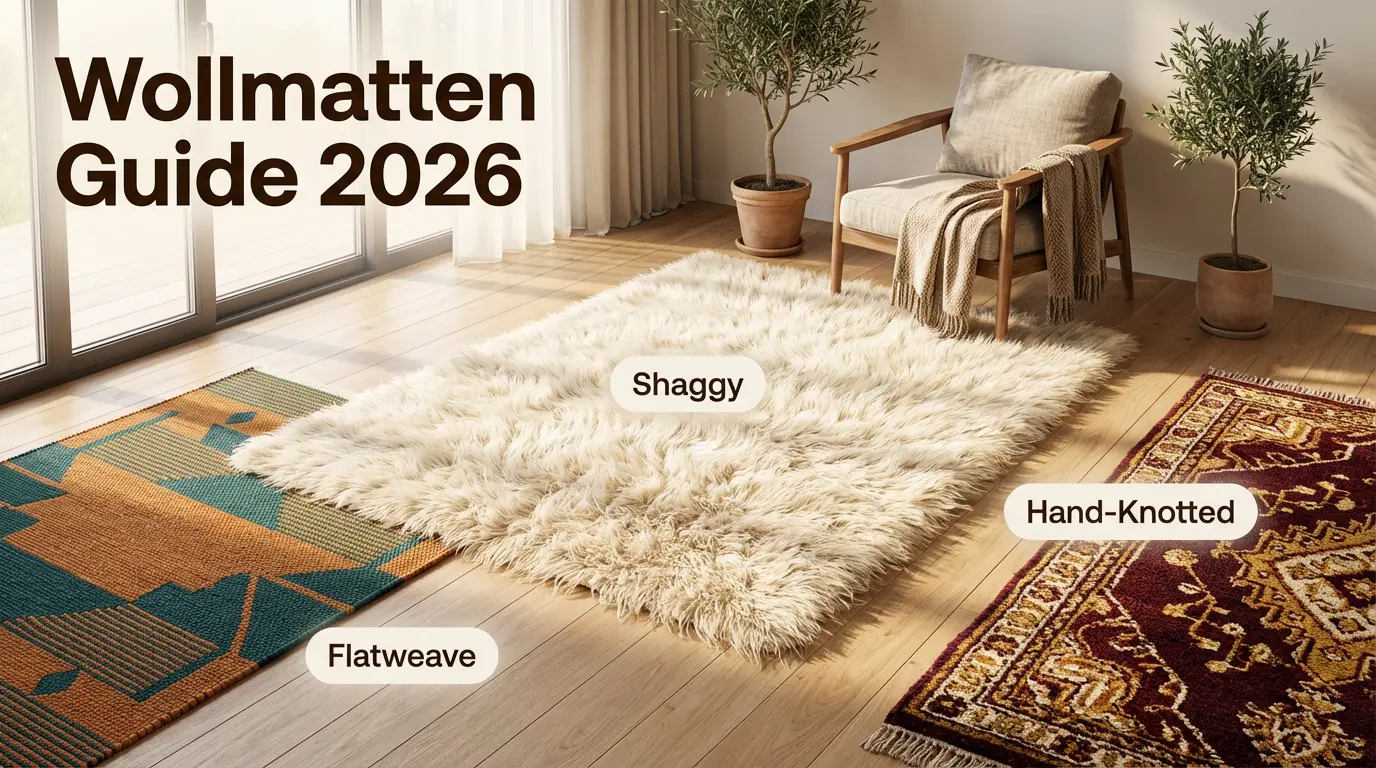
Hand-Knotted options are crafted by skilled artisans who tie each knot individually by hand. This process creates the most durable and visually intricate pieces on the market. They are a genuine long-term investment best suited for living rooms and dining areas where quality matters most.
Machine-Made wool rugs deliver consistent quality at a more accessible price point. They come in a wide range of styles, sizes, and colors, making them a practical choice for homeowners who want wool’s performance without the premium cost.
Flatweave styles have no pile height at all. They lie flat, clean easily, and suit contemporary or minimalist spaces perfectly. Their lightweight construction makes them simple to move or layer over larger rugs.
Shaggy varieties feature a deep, plush pile that creates a luxurious feeling underfoot. These work best in low-traffic areas like bedrooms where comfort takes clear priority over easy maintenance.
How to Choose the Right Wollmatte
Start with the room’s function. High-traffic spaces like hallways and living rooms call for hand-knotted or machine-made durability. Bedrooms are where shaggy varieties truly shine.
Size creates more impact than most shoppers expect. A rug too small visually disconnects a room. A reliable rule: the front legs of all main furniture pieces should sit on the mat. In a standard living room, that typically means choosing nothing smaller than 8 x 10 feet.
Consider pile height next. Low-pile wool mats offer a sleek, clean look and clean up faster. High-pile options add warmth and visual softness but require more upkeep in busy areas.
Budget is a real factor worth planning around. Hand-knotted wollmatten range from $300 to over $2,000 depending on size and origin. Machine-made options start around $80 and still deliver solid performance for everyday household use.
For practical home buying and lifestyle guides covering textiles and interior investments in 2026, Billionscope is worth bookmarking.
Caring for Your Wool Mat the Right Way
Wool rewards simple good habits. Vacuum weekly using a low-suction setting without a beater bar, which damages fibers over time. Rotate your rug every six months to distribute wear evenly across the surface.
For spills, blot immediately with a clean cloth. Never scrub. Wool absorbs liquid quickly, so acting within the first 30 seconds prevents most stains from setting permanently. Professional cleaning once a year keeps fibers fresh and adds meaningful years to the rug’s life.
Frequently Asked Questions
Are wollmatten good for people with allergies?
Yes. Wool fibers naturally trap allergens including dust mites, pollen, and pet dander at the surface rather than releasing them into breathing air. Regular vacuuming removes these trapped particles cleanly, which is why wollmatten are a preferred flooring choice in allergy-sensitive households.
How long do wollmatten last?
A well-maintained hand-knotted wollmatte can last anywhere from 20 to 50 years. Machine-made versions typically hold up for 10 to 15 years with consistent care. Lifespan depends primarily on foot traffic levels, cleaning frequency, and the quality of wool used in production.
Are wool mats environmentally friendly?
Yes. Wool is a fully renewable and biodegradable natural resource. Sheep regrow their fleece annually, and wool rugs decompose naturally at end of life. Compared to synthetic rugs made from petroleum-based materials, wool mats carry a significantly lower environmental footprint.
What is the difference between merino and standard wool in a wool mat?
Merino wool produces a softer, finer texture that feels exceptional on bare feet, making it ideal for bedrooms and reading areas. Standard wool is coarser but more wear-resistant, which suits high-traffic zones like living rooms and hallways far better.
Conclusion
Wollmatten offer something synthetic alternatives have never genuinely matched: real longevity, natural comfort, and a quality that quietly improves how your home feels to live in every single day. Whether you choose a hand-knotted centerpiece for the living room or a flatweave option for a minimalist hallway, the right wool mat pays for itself through consistent performance that lasts years. The decision comes down to three things: how the room gets used, what size actually fits the space, and the wool type that suits your lifestyle. Get those three right, and you’ll end up with a piece that outlasts trends, manages allergens naturally, and makes every room feel more intentional. Wool has earned its place in homes across centuries, and a quality wollmatte purchased today will still be doing its job a decade from now.
